
I recently hit the 6 month post-surgery mark. In a moment of heart appreciation I did some back-of-the-napkin calculations on how many beats I’ve gotten from my remodeled heart these first 6 months.
Cue the Rent music…
29,013,120 heart beats. How do you measure, measure a heart?
Technically speaking, not by counting heart beats. Doctors look at many other values on echocardiograms and CT scans: ejection fraction, ventricle volume, wall thicknesses, leakage, and valve opening sizes to name a few. And, thanks to everything going as planned for a very major surgery all my stats are what they are expected to be—not necessarily “normal” but expected.
But for me, the surgery was never about the stats. It was about life and living and maximizing quality and longevity. So, I stand in awe of my new heart situation—how hard it has worked and how far it has carried me these first six months. This also gives me hope it can continue to do its thing on my behalf for many decades to come.
While I’m here reflecting and appreciating my heart and my health, part and parcel to where I am today is the support I was fortunate enough to receive every step of the way during my surgery preparation, procedure, and recovery. If you’re here reading this, you are part of my deep gratitude list and I hope you see yourself honored in the appreciations that follow.
Research lead. As many of you know, I did a lot of research leading up to my surgery. What type of surgery? What type of valve? Which surgeon would be the best fit? How wide of a net do I cast geographically? Luckily, I had Ralph Brindis, a formidable (retired) cardiologist and close family friend, in my corner connecting me with renown doctors and surgeons in his network and sending me countless journal articles which he kindly summarized in terms I could understand. And when I had reached information saturation he reminded me “At some point you will have to become the patient and not a fellow surgeon debater.” That was certainly a hard leap to take, but somehow I did it.
Surgeon. Anyone who has heard me talk about my surgery and recovery has undoubtedly heard me sing praises about my surgeon, Dr. Chris Burke, and the entire team at the University of Washington medical center in Seattle. It is rare to find a surgeon with the technical and interpersonal skills he possesses. From my first televisit with him, I knew he was the one and my instincts were 100% correct. After all, he and a large team carried me through 6 hours of surgery, which included 3 hours on the heart and lung machine to keep me alive, while my heart was stopped so Dr. Burke and his team could remove my diseased aortic valve, dissect out my pulmonary valve, move it to the aortic position, and place a cadaver valve into the pulmonary position. It takes a special person to train, become and be a surgeon and I’m so grateful to the skilled and compassionate people who take on this outsized responsibility.
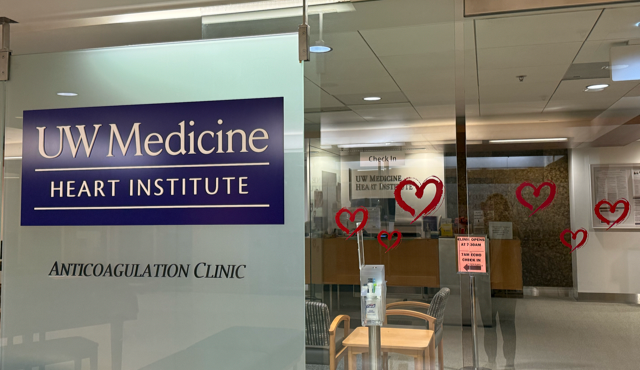
University of Washington hospital. The hospital team that cared for me in my scariest, weakest, and hardest moments when I was both conscious and unconscious provided the most compassionate and well-informed care. I never once had to remind anyone who walked into my room why I was there, what my precautions were, or how to handle medications. They were a seamless team of professionals adept at caring for real humans in their moments of peak vulnerability, discomfort, and pain.
Valve donor. It is not lost on me that one of my gains in this Ross procedure was someone else’s loss. Namely, the valve donor whose pulmonary valve continues to live outside of them, in my body. A few weeks after my surgery I contacted Artivion, the cardiac biomedical company that was the provider of my donor valve. They were able to share that my valve came from a 56-year-old male. They also have a program that connects donor and recipient families. So, I of course got to writing and sent them a letter to share with my donor’s family. I have not received a response and may never, but I am forever grateful and connected to this fellow human who chose during life to be an organ donor, paving the way to share their healthy heart valve upon their passing. I also am going to take this moment to suggest that everyone reflect on their own organ donor status. I have a strongly held belief in it and see it as a positive for all parties—the obvious gain for a recipient and at the same time an opportunity for a part of a donor to live on. This is of course a very personal choice for everyone and I have no judgment on anyone’s decision. Just asking for a moment of reflection and consideration amidst the context of this blog post.
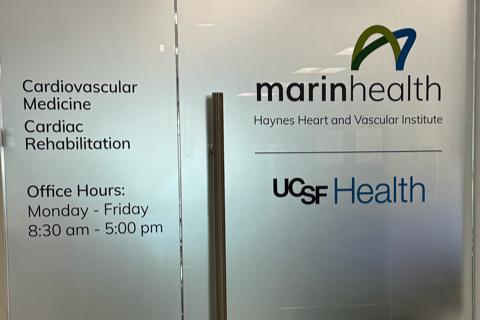
Marin General cardiac rehab team. Cardiac rehab is a closely monitored “get back to exercise” program for people who have been through a “qualifying cardiac event.” Despite needing a major cardiac event to qualify, cardiac rehab is in high demand with a long wait list. But when you are so terrified of surgery and you grasp on to anything that makes you feel more in control you research all the things and cardiac rehab was no exception. So, before my surgery I had Brad set a reminder to get me on the waitlist the day after my “cardiac event,” namely my surgery. And on June 1, just over 2 months after my surgery, it was my turn to start my 36 sessions of cardiac rehab. I can’t overstate how amazing the program is at Marin General. I was part of a cohort that attended every Monday, Wednesday and Friday at 11. We were all in different life, health, and exercise stages but every one of us was guided and monitored by a team of exercise physiologists, nurses, nutritionists, and doctors who showed up to every session with care, compassion, and encouragement. They somehow strike the perfect balance of pushing you just the right amount as you learn and relearn how to safely exercise and be active. The program meets you where you are and taps into your own motivation to help you discover a healthier you. I went from exclusively walking and using the lightest exercise bands to lifting up to 12 pounds of weight and running and sprinting on a treadmill. I feel so lucky this program was part of my recovery—I just wish it existed for all kinds of health issues as movement is truly a medicine (as a friend kept reminding me).
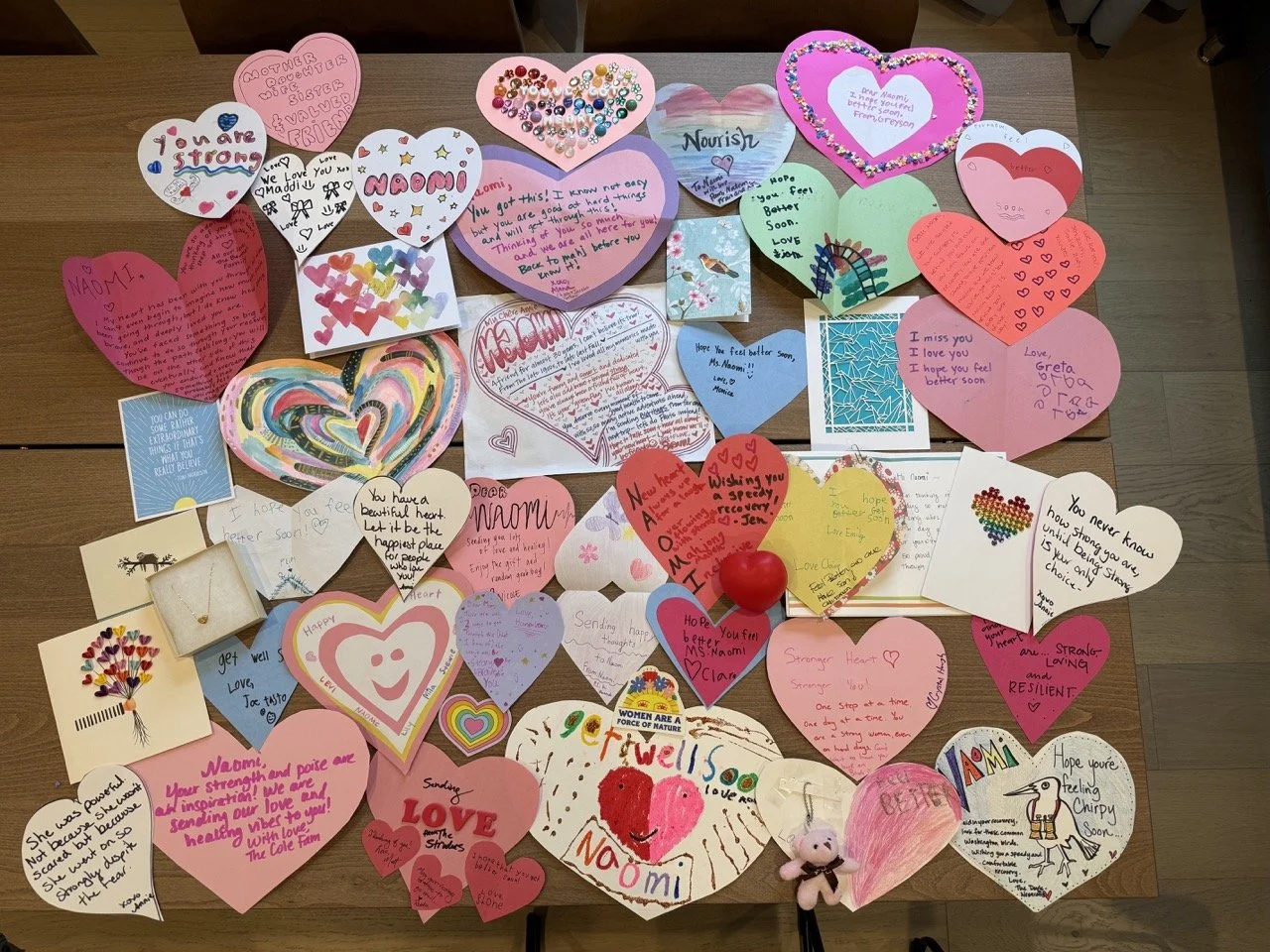
My village. The surgery and hospital part of this whole process was complex and so were recovery, life tasks, logistics, and precautions that followed. Every phone call, card, heart card, email, text, check-in and gift meant the world to me. Each of these actions made me feel so cared for and when you are in the realm of pain, recovery, and being disconnected from the world whether in the hospital or taking it easy at home the loneliness is real and these connection points are a literal bright spot. Even when I appeared more or less “back to myself” a few weeks after surgery and had good walking mobility the reality was that I could do very little with my arms for about 10 weeks while my sternum healed. People often said “You don’t look like you just had heart surgery.” While I took this with pride and as a compliment, the reality was that I definitely felt like I had just had heart surgery and the meals, carpools, rides, slow walks, good vibes shared, and visits were all a critical part of my healing and medicine. It was also a reminder that you never know what someone is going through. In fact, recently I ran into a neighbor I hadn’t seen in a few months while I was on a walk. While I had been battling my cardiac woes he had been facing his own set of significant medical blows and neither of us had any idea what was going on with the other until we got into a deeper level of conversation and ended up continuing our walks together.
My family. Going through the most terrifying thing in your life feels a little more manageable with family by your side and I was lucky enough to have my A-team with me in Seattle— Brad, my parents, and my brother. Meanwhile my kids were in the best of hands with my mother-in-law staying with them in Marin. I can’t imagine what it was like going to school while mom was in surgery or waiting in the hospital all day knowing my heart was “offline” for a good portion of it, but boy am I grateful for my family who was there for me and for each other. And a special shout-out to Brad who stayed with me in the ICU the first two nights and took care of me with such love, compassion, and dedication until I was back to independence. Fun fact, we booked 22 plane flight legs to put all the logistics in place for support in Seattle and back home in Marin. And a special shout out to friends who feel like family, like Ashlee who flew up to Seattle for 2 days while my parents went back to the Bay Area to get the kids. She took the best care of me and even changed my bandages those first few days.
The Beat Goes On
As I mark the 6 month post-surgery milestone I am happy to say the beat goes on and I feel great. In my original blog post I wondered if feeling good post-surgery might even be better than what I had ever known. I didn’t have an answer to that question immediately, but about 5 months post-surgery when my tender chest and sternum could finally handle a little impact I picked up my exercise exertion level quite a bit and for the first time I could remember my chest didn’t burn. It turns out that chest burning during exercise exertion isn’t the norm, it was just all I ever knew and must have been a sensation related to a compromised valve.